Strengthening Wildlife Crime Prosecution Through First Responder Training in Lomako and Iyondji, DRC
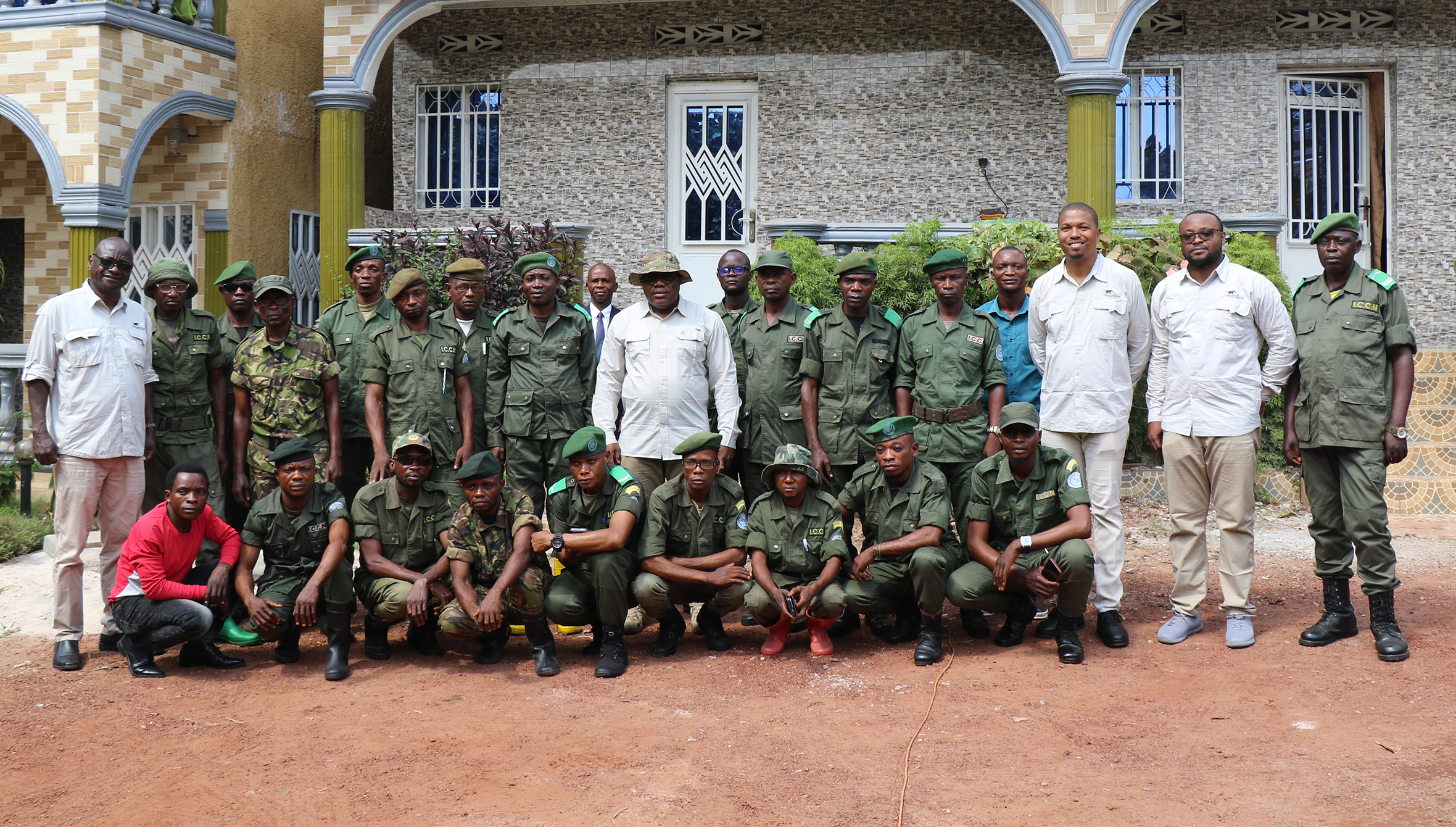
First Responders Unit and trainers in the DRC.
From May 28–31, 2026, in Boende, Democratic Republic of the Congo (DRC), the African Wildlife Foundation (AWF) trained eco-guards from the Lomako Yokokala Faunal Reserve and the Iyondji Bonobo Community Reserve as first responders to wildlife crime scenes, with a strong emphasis on integrity and anti-corruption.
As pressure on wildlife continues to intensify, the training strengthens the capacity of frontline defenders protecting one of the world's last strongholds for bonobos. Equipped with practical investigative skills and wildlife crime scene kits, the eco-guards are now better prepared to secure crime scenes, preserve critical evidence, and support successful wildlife crime prosecutions.
This initiative was funded by the U.S. Bureau of International Narcotics and Law Enforcement Affairs.
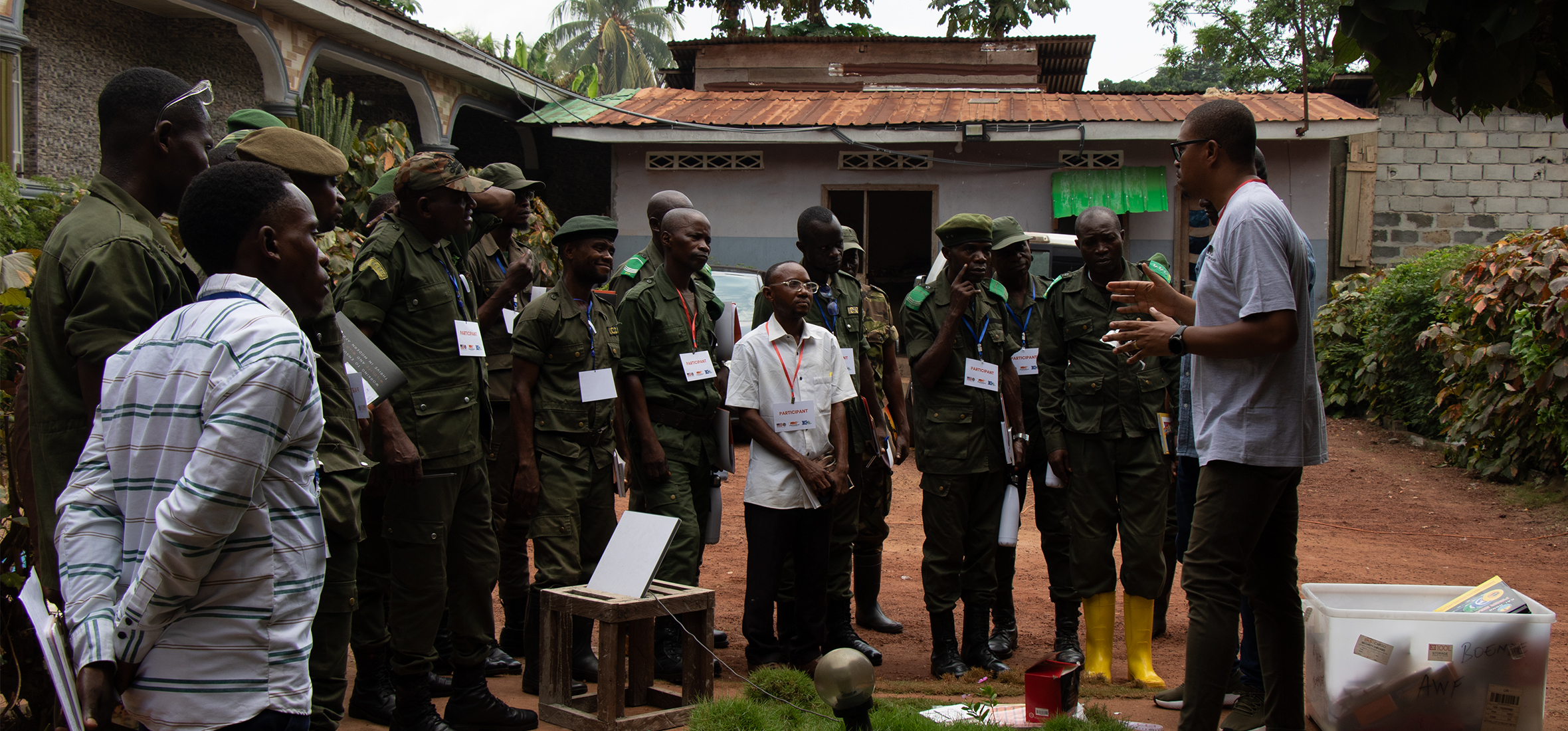
An eco-guard briefing.
For eco-guards of the Congolese Institute for Nature Conservation (ICCN), effective response begins with preparation.
Briefings provide an opportunity to clarify roles and prepare officers for the duties that come with protecting wildlife and preserving evidence.
"Briefings are critical moments to align strategies, sharpen awareness, and prepare for the weight of responsibility," said Benedict Lumancia, Project Officer for Wildlife Crime Investigations.
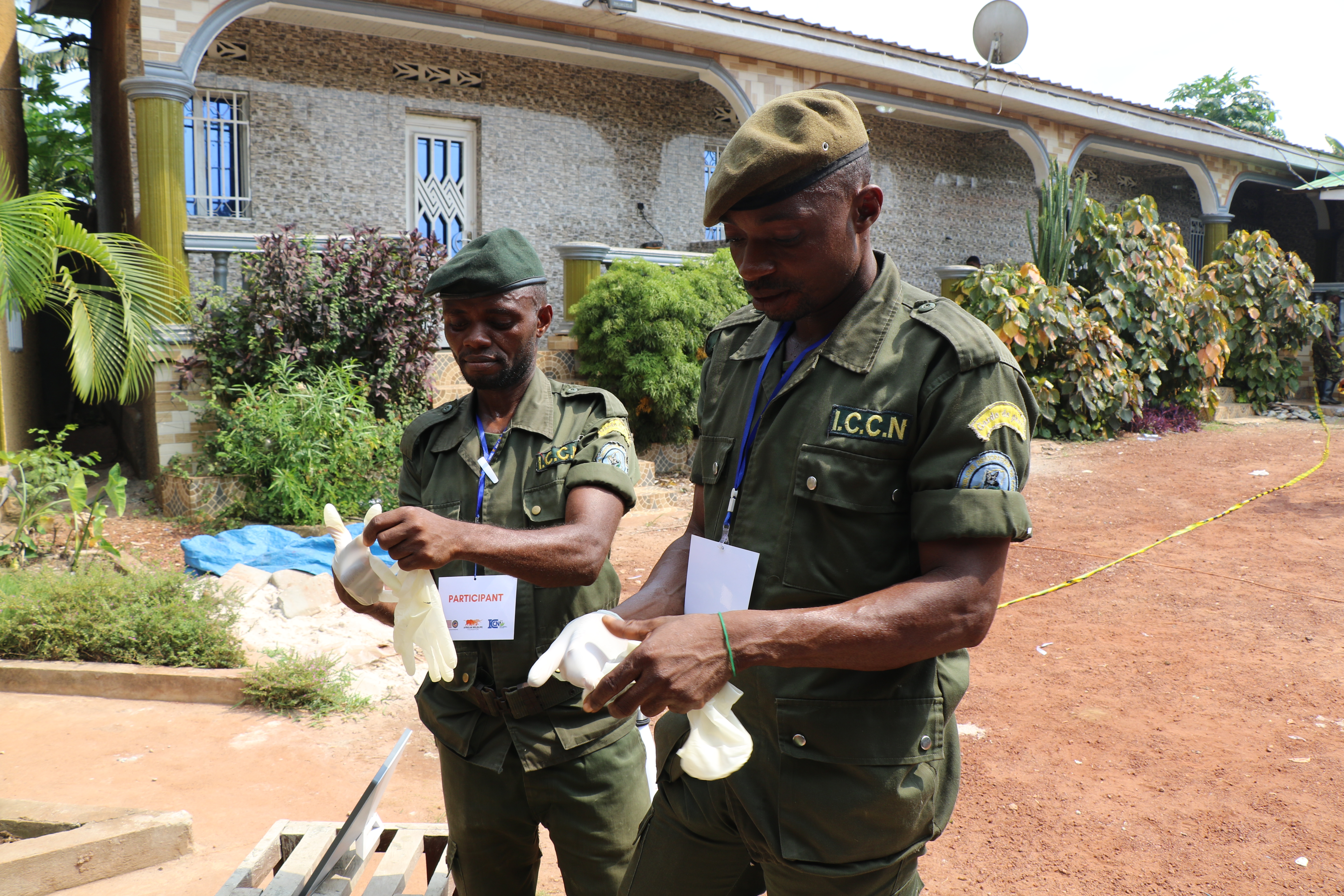
Eco-guards prepare to handle evidence.
Every detail matters. Putting on gloves is more than a routine procedure; it is a deliberate step to protect the integrity of evidence and prevent contamination.
"Discipline in small actions ensures justice in larger outcomes," said Joe Kassongo, Senior Legal Officer.
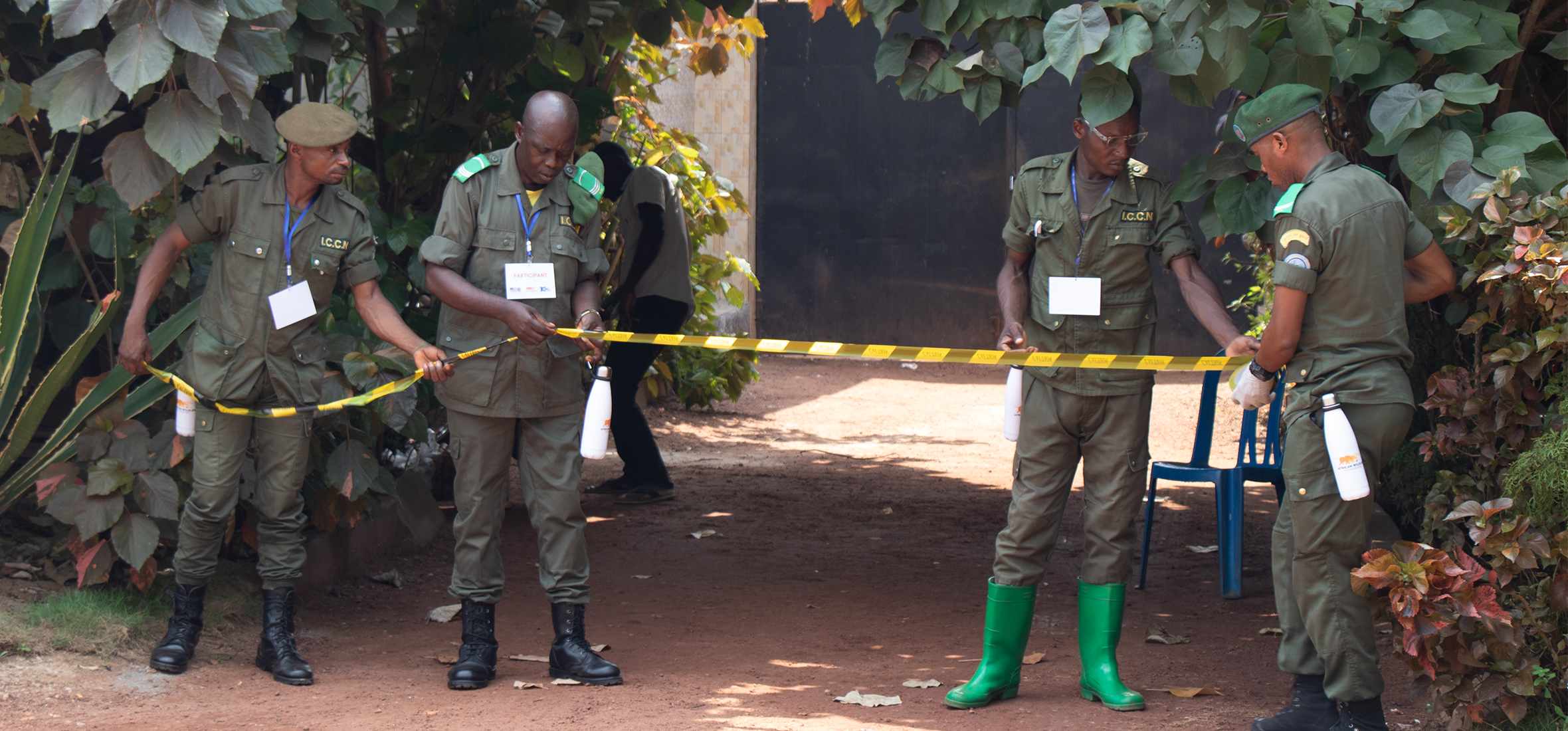
ICCN eco-guards secure a crime scene.
Protecting a crime scene is the first step toward protecting the truth. By carefully marking the boundaries of the scene, first responders ensure that evidence remains untouched and admissible during investigations and prosecution.
"Marking the boundaries of a crime scene means preserving the truth," said Lucien Lokumu, ICCN Director in charge of Wildlife Crime.
Crime scene tape becomes a silent barrier against interference—nothing disturbed, nothing lost, nothing forgotten.
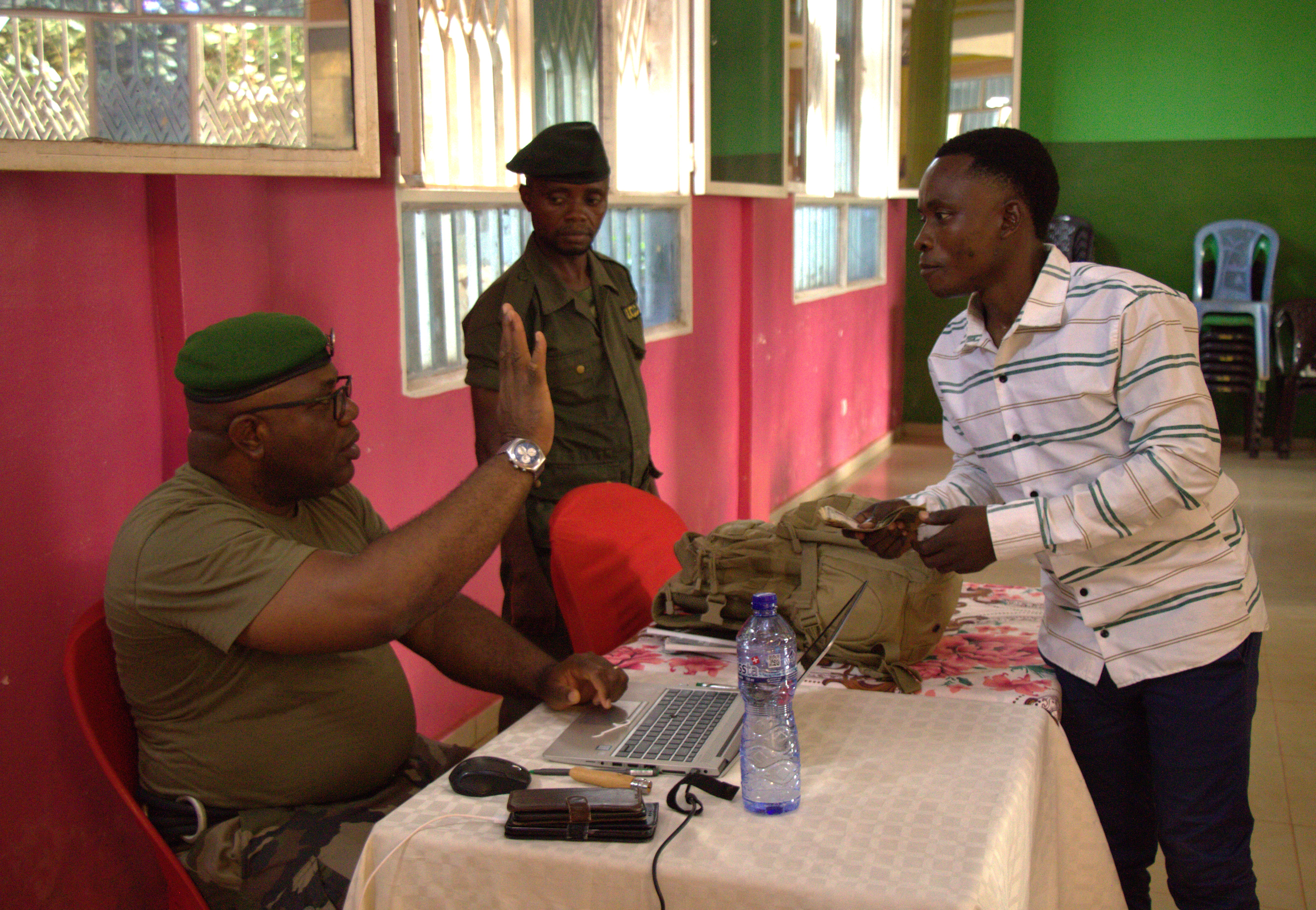
Rejecting corruption is a vital component of protecting wildlife and earning the trust of local communities.
Effective wildlife protection depends not only on technical skills but also on integrity. Rejecting corruption strengthens justice systems, builds public trust, and ensures that wildlife crime investigations remain credible and impartial.
"True conservation begins with honesty," said Christian Mbuyi, Project Assistant.
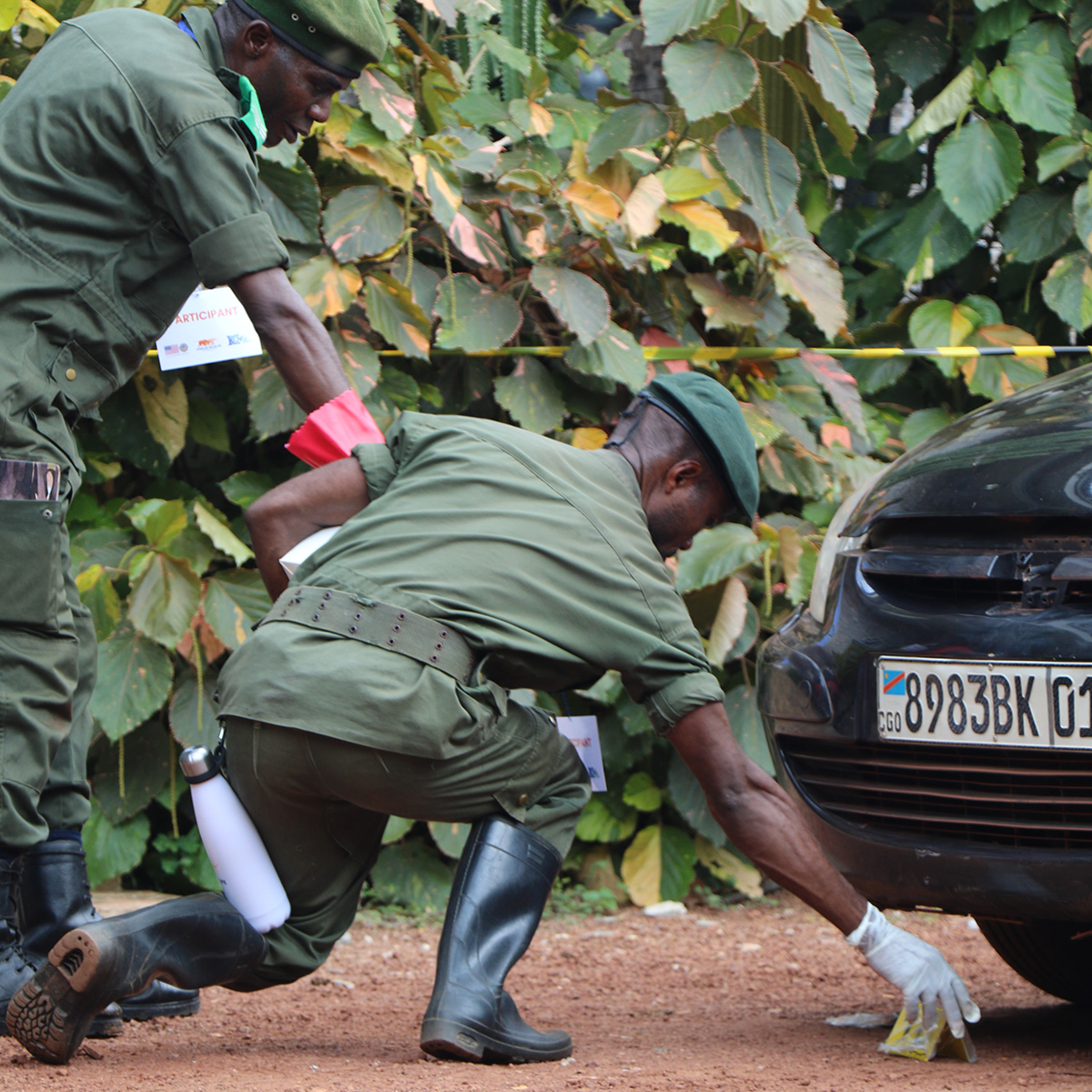
Eco-guards place evidence markers.
Every numbered evidence marker helps tell the story of what happened. By carefully identifying, documenting, and cataloging evidence, eco-guards transform scattered clues into a clear chain of evidence that can support successful prosecution.
"We learned that carefully identifying and cataloging evidence transforms scattered clues into a clear path toward accountability," said a Lomako eco-guard responsible for monitoring and evaluation.
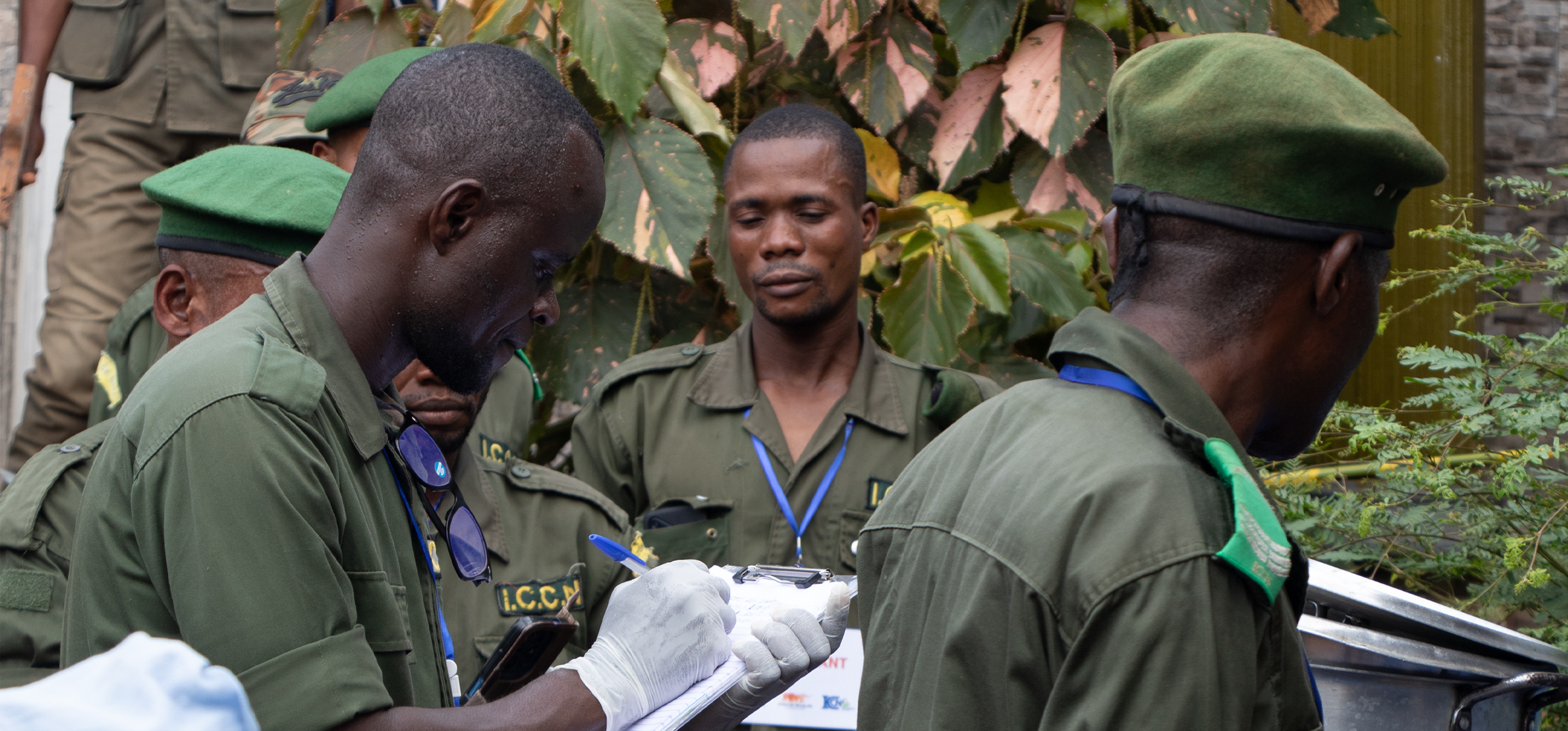
An ICCN eco-guard takes detail notes, documenting evidence.
Evidence does not speak for itself—documentation gives it a voice. Accurate field notes, photographs, and properly recorded evidence are essential for building strong cases. Without them, wildlife crime cases can fall apart; with them, justice has a stronger chance to prevail.
Through this training, eco-guards return to the field better equipped, more confident, and deeply committed to safeguarding the DRC's unique wildlife. Beyond new technical skills, they carry an even greater responsibility: protecting species found nowhere else on Earth and ensuring that wildlife criminals are held accountable before it is too late.